
Explore Tshwane University of Technology: Admissions, Courses, and Campus Life in 2024
Tshwane University of Technology (TUT) continues to stand out in 2024 as one of South Africa’s most dynamic institutions of higher learning. With campuses strategically located across Gauteng, Mpumalanga, and Limpopo, TUT serves a broad and diverse student population, offering hands-on training and an emphasis on innovation. The university’s strong academic reputation, modern facilities, and career-centered approach make it an appealing choice for both local and international students seeking quality tertiary education in South Africa.
Admissions Process and Requirements
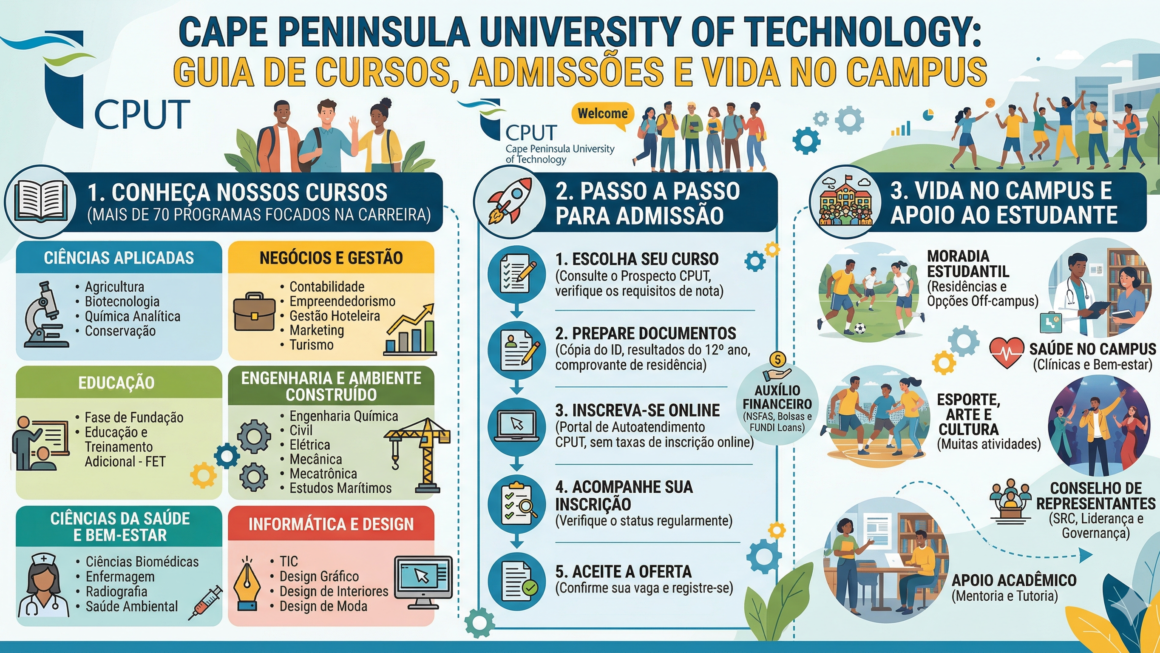
The admission process at TUT in 2024 is designed to be transparent, accessible, and aligned with national higher education guidelines. Prospective students begin by completing the online application available on the official TUT website. Applicants must provide certified copies of academic records, identification, and any additional documents based on their qualification type. The university evaluates candidates using a combination of the Admission Point Score (APS) and specific departmental requirements. Since competition for certain programs can be intense, early application submission is highly encouraged.
Matriculants applying for National Diploma or Bachelor Degree programs must meet minimum APS thresholds for the faculty of interest. For example, engineering and science-based qualifications typically require higher mathematics and physical science scores, while arts, design, and communication programs assess language proficiency and creative portfolios. International students are required to submit equivalent qualifications certified by the South African Qualifications Authority (SAQA) and provide proof of English language competency if their schooling was conducted in another language.
Once an application is processed, successful candidates receive provisional admission offers, which become official only after all required documents are verified. TUT also accommodates Recognition of Prior Learning (RPL) for mature applicants who have industry experience but may not meet traditional academic prerequisites. This inclusive policy supports lifelong learning and skills development, allowing individuals to advance in their careers through formal education.
Tuition Fees, Financial Aid, and Scholarships
In 2024, TUT remains committed to providing affordable education. Tuition fees vary depending on the course type, qualification level, and credit load per semester. Students can access detailed fee structures through the university’s Finance Department portal. The institution also offers convenient payment options, allowing installments across the academic year to ease financial strain. TUT works closely with the National Student Financial Aid Scheme (NSFAS), ensuring that eligible students from low-income households receive full or partial funding for tuition, accommodation, and study materials. In addition, several merit-based bursaries and corporate sponsorships are available, rewarding academic excellence, leadership, and community involvement.
Academic Faculties and Course Offerings
TUT operates eight main faculties, each offering a range of undergraduate and postgraduate programs tailored to meet modern industry demands. The Faculty of Engineering and the Built Environment remains one of the most popular, offering cutting-edge qualifications in civil, electrical, mechanical, and industrial engineering. With advanced laboratories and a focus on applied research, this faculty produces graduates who are well-prepared for the evolving technological world.
The Faculty of Science specializes in biotechnology, chemistry, environmental health, and information technology. Its partnerships with science councils and industry leaders enable students to participate in research projects that address real-world challenges such as sustainable energy and water conservation. The Faculty of Humanities emphasizes human development, offering programs in education, social sciences, and journalism. Graduates from this faculty contribute significantly to shaping South African society through knowledge dissemination, community engagement, and educational excellence.
The Faculty of Arts and Design cultivates creativity through programs in performing arts, fine arts, interior design, and multimedia production. Its students often participate in exhibitions, festivals, and international competitions, gaining industry exposure early in their academic journey. The Faculty of Information and Communication Technology (ICT) continues to expand in 2024, offering high-demand qualifications such as data analytics, cybersecurity, and software development, addressing the growing digital skills gap in Africa.
TUT’s Faculty of Economics and Finance provides programs in accounting, public finance, and business administration. With strong links to the financial sector, students gain internship opportunities that enhance workplace readiness. The Faculty of Management Sciences focuses on hospitality management, marketing, human resource management, and entrepreneurship. Its curriculum emphasizes innovation, leadership, and strategic business development. The Faculty of Health Sciences offers qualifications in nursing, biomedical technology, radiography, and emergency medical care, playing a vital role in strengthening South Africa’s healthcare system.
Research, Innovation, and Community Engagement
As a technology-driven university, research and innovation form the backbone of TUT’s academic identity. The university hosts several research centers focusing on sustainable development, renewable energy, biotechnology, and digital transformation. Faculty members collaborate with government agencies and industry to produce research that contributes to national growth. Students are encouraged to participate in innovation challenges, start-up incubation programs, and applied research projects, allowing them to translate theoretical knowledge into practical solutions.
TUT’s community engagement programs also demonstrate its commitment to social development. Projects addressing youth empowerment, environmental education, and entrepreneurship development extend the university’s impact beyond its campuses. These initiatives foster a sense of responsibility among students, preparing them to become active contributors to society upon graduation.
Campus Life and Student Experience
Life at Tshwane University of Technology in 2024 is vibrant, inclusive, and culturally rich. The institution’s multiple campuses—Soshanguve, Pretoria West, Arcadia, Ga-Rankuwa, Polokwane, Mbombela, and eMalahleni—each have unique atmospheres, modern lecture halls, advanced laboratories, and recreational facilities. On-campus accommodation is available for students who prefer proximity to academic resources, while private off-campus housing offers flexibility and independence. The Student Affairs Department ensures that all residential and welfare services promote safety, diversity, and personal growth.
Student organizations and societies play a major role in campus engagement. From academic clubs and cultural associations to sports teams and leadership initiatives, students have numerous avenues to participate and develop life skills. The TUT Sport Department supports athletic excellence across multiple disciplines such as soccer, basketball, netball, and athletics. Annual tournaments and inter-campus games help foster teamwork, healthy competition, and school spirit.
Career development and mentorship programs are integral to student life. The Career Centre organizes job fairs, internship placements, and industry talks, helping students transition smoothly into the workforce. Counseling services and health facilities are readily available, ensuring that mental and physical well-being remains a top priority. The university’s vibrant social calendar, featuring music events, technology expos, and cultural festivals, adds to the balanced student experience that defines the TUT identity.
Technology, Sustainability, and Future Outlook
In keeping with its vision to be a leading institution in technology and innovation, Tshwane University of Technology continues expanding its digital ecosystem in 2024. E-learning platforms enable blended learning, while advanced research infrastructure supports experimentation and collaboration. Sustainability initiatives across campuses include energy-efficient buildings, waste recycling projects, and programs promoting green innovation. These efforts reflect TUT’s dedication to preparing graduates capable of addressing global environmental challenges.
Overall, the Tshwane University of Technology remains a beacon of opportunity in South Africa’s higher education landscape—an environment where academic excellence, technological advancement, and social responsibility intersect to empower the next generation of professionals.