
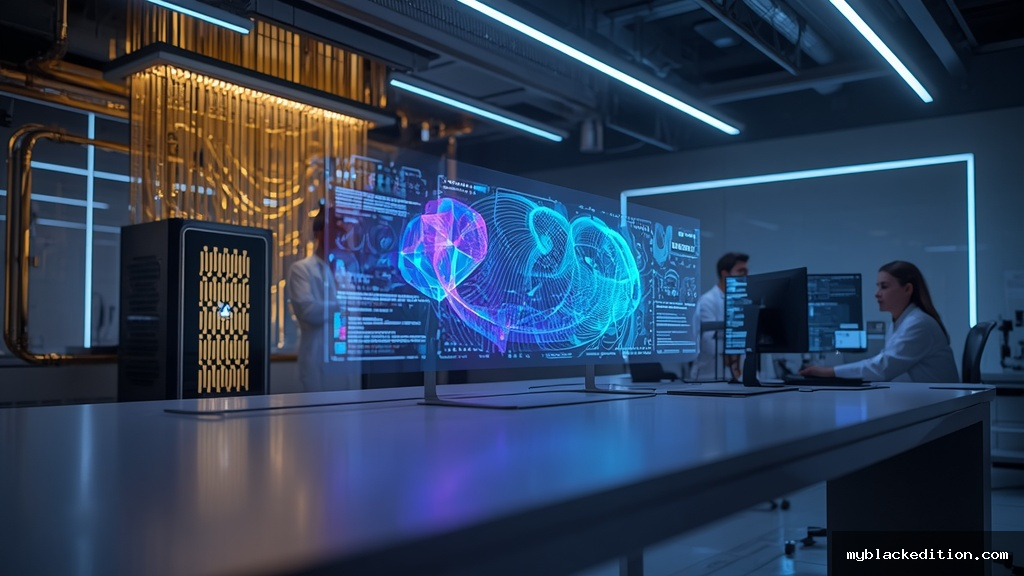
AI Breakthroughs in 2026 OpenAI unveiled GPT-6 in January 2026 featuring multimodal reasoning that processes video audio and sensor data simultaneously. This model powers autonomous factories where robots assemble electronics with 99.2 percent precision reducing defects by half compared to 2025 systems. Healthcare providers adopted GPT-6 for diagnostic imaging analysis cutting cancer detection times from days to minutes in over 500 hospitals across North America and Europe. Stanford researchers combined the technology with brain-computer interfaces allowing stroke survivors to type 85 words per minute using neural signals alone.
Quantum Computing Milestones IBM launched the Condor II 1000-qubit processor in March 2026 delivering quantum advantage for logistics optimization. Volkswagen reported 40 percent fuel savings in fleet routing simulations completed in under four hours. Google achieved qubit coherence times exceeding eight minutes through new error-correction codes announced at the Quantum Summit in Zurich. These codes enable secure quantum key distribution networks spanning 500 kilometers between financial centers in New York and London. D-Wave expanded its annealing systems to 7000 qubits supporting real-time portfolio risk calculations for hedge funds managing 200 billion dollars in assets.
Sustainable Innovation Developments The ITER fusion reactor sustained plasma at 150 million degrees Celsius for 12 minutes in June 2026 marking a critical threshold for net energy gain. AI algorithms dynamically tuned magnetic fields boosting output efficiency by 25 percent. Perovskite solar panels reached 35 percent conversion rates after machine learning screened 50,000 material combinations in weeks. Tesla deployed these panels across 10,000 home installations in California yielding average monthly savings of 180 dollars per household. Carbon capture startups used quantum simulations to design filters that remove 92 percent of emissions from steel plants at half the previous energy cost.
Autonomous Systems and Robotics Waymo expanded robotaxi fleets to 25 cities by April 2026 with AI vision systems handling snow and construction zones flawlessly. Delivery drones from Amazon completed 1.2 million flights monthly using edge computing chips that process obstacle data in 3 milliseconds. Boston Dynamics introduced Atlas Pro robots capable of assembling furniture from flat-pack instructions without human guidance in 18 minutes per unit. Agricultural firms integrated these robots with quantum-optimized crop models increasing yields by 30 percent while cutting water usage 22 percent across Midwest cornfields.
AI Ethics and Regulatory Progress The European Union enforced the AI Accountability Act in February 2026 requiring bias audits for all high-risk systems. Companies like Meta published transparency reports showing fairness improvements in recommendation algorithms after retraining on diverse datasets. NIST released quantum-resistant encryption standards adopted by 60 percent of U.S. banks by mid-year protecting transactions against future decryption threats. Global conferences in Singapore highlighted collaborative frameworks balancing innovation speed with privacy safeguards ensuring public trust remains above 75 percent in annual surveys.
Cross-Industry Technology Integrations NVIDIA unveiled AI-quantum hybrid chips in May 2026 accelerating molecular modeling for pharmaceutical firms. Pfizer used these chips to simulate protein folding in hours instead of months shortening vaccine development cycles. SpaceX incorporated similar processors into Starlink satellites improving bandwidth allocation during peak global usage. These integrations create seamless data flows between terrestrial quantum networks and orbital AI systems supporting climate monitoring that predicts extreme weather events with 94 percent accuracy two weeks ahead.