
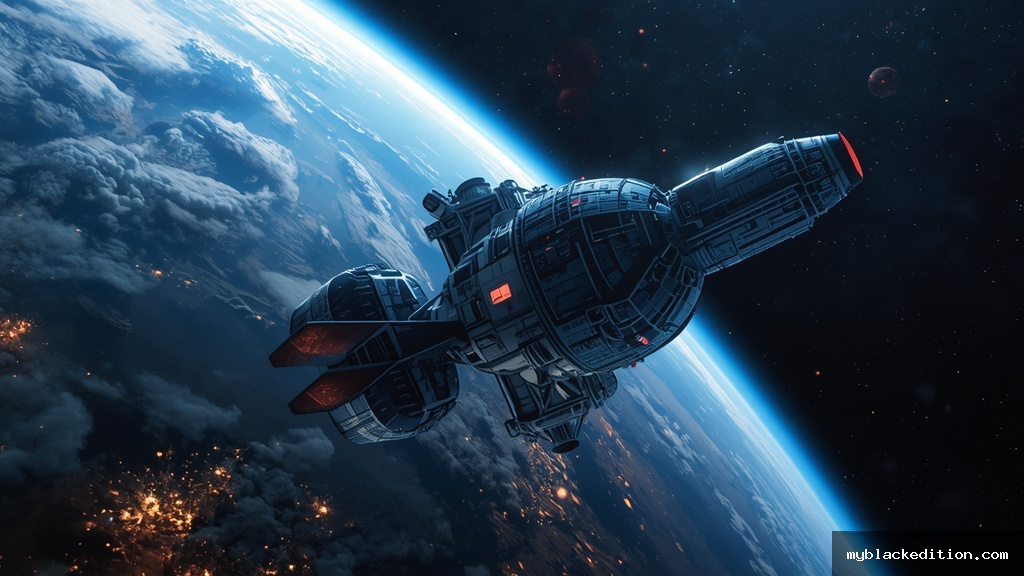
Reusable rocket technology leads space technology 2026 advancements by slashing launch costs below $500 per kilogram through iterative designs from companies like SpaceX and Blue Origin. Next-generation engines incorporate methane propulsion and grid-fin enhancements for rapid reusability, enabling over 50 flights per booster annually. These systems integrate AI predictive maintenance to forecast component wear, reducing downtime by 40 percent and supporting frequent resupply missions to orbital platforms.
Mega-constellations expand global broadband coverage in 2026 with over 15,000 active satellites deployed by operators including Starlink and Amazon Kuiper. Laser inter-satellite links achieve 100 Gbps data rates, while phased-array antennas deliver low-latency connectivity to remote regions. Spectrum-sharing protocols and orbital slot optimization minimize interference, fostering applications in autonomous shipping and precision agriculture that rely on uninterrupted space-based networks.
Artificial intelligence transforms mission autonomy across deep-space probes and Earth-orbiting assets. Onboard machine learning models process sensor data in real time, enabling spacecraft to adjust trajectories without ground intervention and detect anomalies 30 percent faster than traditional telemetry. Edge computing hardware rated for radiation environments supports swarm robotics for asteroid mining surveys, cutting operational expenses through decentralized decision-making.
In-space manufacturing scales with 3D printing systems aboard the International Space Station successors. Regolith-based printers produce structural components for lunar bases using local materials, while polymer extrusion creates spare parts on demand. This reduces Earth-launch dependency by 60 percent and allows customization of habitats with embedded sensors for structural health monitoring during extended missions.
Space debris removal gains momentum via active capture technologies such as net harpoons and magnetic docking arms mounted on service satellites. Ground-based lasers nudge small fragments into atmospheric reentry, while AI catalogs track over 40,000 objects larger than 10 centimeters. International guidelines enforce end-of-life deorbiting within five years, preserving orbital slots for new deployments in low Earth orbit.
Lunar habitat prototypes incorporate inflatable modules and radiation-shielding regolith bags tested during Artemis follow-on flights. Closed-loop life support recycles 95 percent of water and oxygen through advanced electrolysis and hydroponic systems. Robotic precursors assemble solar arrays delivering 100 kW continuous power, paving the way for sustained human presence by integrating 3D-printed landing pads that mitigate dust hazards.
Quantum communication satellites establish unhackable links for military and financial sectors through entangled photon distribution. Low-loss optical terminals maintain fidelity over 1,000 kilometers, supporting quantum key distribution networks that integrate with terrestrial fiber infrastructure. Error-correction algorithms adapted for space conditions achieve 99.9 percent key generation rates, securing data transfers against emerging computational threats.
Private space tourism accelerates with suborbital vehicles completing daily flights carrying eight passengers each. Cabin designs feature large viewports and zero-gravity recreation zones, while medical screening protocols expand eligibility to individuals with controlled health conditions. Revenue from these experiences funds research into microgravity pharmaceuticals, including protein crystal growth that yields higher-purity compounds for next-generation therapeutics.
These interconnected developments position space technology 2026 as a catalyst for terrestrial industries, from climate monitoring via hyperspectral sensors to resource prospecting through orbital surveys.